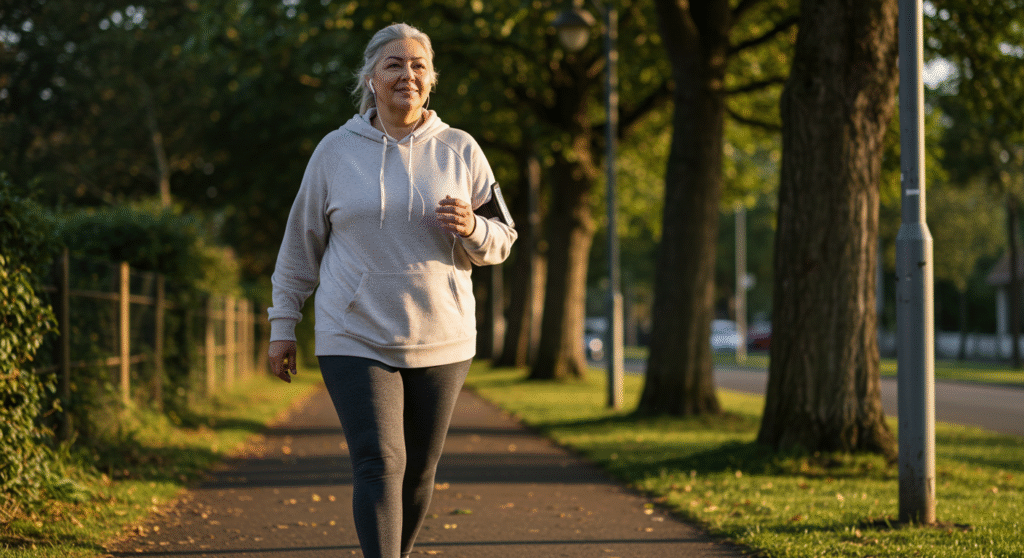
Burn More Fat from Every Walk: 9 Science-Backed Walking Hacks That Work After 50
Once we pass 50, our metabolism doesn’t exactly race ahead. But walking? That’s still one of the best things you can do to stay fit, stable, and strong. Even better? With a few science-backed tweaks, your daily walk can help burn more fat and manage blood sugar too—no fancy gear or gym needed.
Let’s look at 9 simple walking hacks that are especially helpful after 50:
Consistency beats intensity.
Start where you are.
Walk your way to better health.
1. Walk in a Fasted State (Before Breakfast)
Walking before eating—especially first thing in the morning—can increase fat oxidation, meaning your body pulls more energy from stored fat instead of food.
A study published in the British Journal of Nutrition found that participants who exercised before eating breakfast burned up to 20% more fat than those who ate first [1].
✅ Tip for 50+ walkers: Keep it light and short to start—try 20 minutes at a gentle pace. Stay hydrated, and avoid this hack if you feel lightheaded or have blood sugar issues.
2. Walk After Meals to Lower Blood Sugar
A 10–20 minute walk after eating—even just around the block—can help bring post-meal blood sugar back down faster. This is especially important for those managing prediabetes, Type 2 diabetes, or age-related insulin resistance.
In one study from Diabetes Care, older adults who walked for 15 minutes after each meal saw better blood sugar control than those who walked all at once earlier or later in the day [2].
✅ Julie’s note: After dinner is a great time to stretch your legs. Walking helps digestion too—win-win.
3. Add Short Intervals (Speed Bursts)
Known as interval walking, this involves alternating between normal and brisk paces. It stimulates your cardiovascular system and burns more calories—even after you’ve stopped walking.
In a 5-month study in Japan involving older adults, interval walking increased aerobic fitness and fat loss more than steady-paced walking [3].
How to do it (easy version for 50+):
Warm up with 5 minutes of slow walking
Walk briskly for 30 seconds to 1 minute
Return to your normal pace for 2–3 minutes
Repeat for the duration of your walk
✅ Start with 1–2 speed bursts per walk and build up over time.
4. Use a Gentle Incline or Hills
Walking uphill activates larger muscle groups (glutes, calves, hamstrings), which increases your calorie burn without needing to increase your pace.
According to research published in the Journal of Biomechanics, incline walking significantly increases energy expenditure compared to flat-surface walking [4].
✅ Tip for aging joints: Keep inclines mild (5–10%) if you have knee issues, or alternate hill days with flat surface days.
5. Wear a Light Weighted Vest
Adding a weighted vest (5–10% of your body weight) slightly increases your calorie burn without the joint impact of jogging. It also helps strengthen bones and muscles, which is crucial post-menopause and after 50.
A study in the Journal of Strength and Conditioning Research showed increased heart rate and energy output when participants walked with vests [5].
✅ Choose a vest with good shoulder support and avoid anything too heavy—it should challenge, not strain.
6. Focus on Arm Engagement
Swinging your arms purposefully helps increase calorie burn and improves posture, which often declines with age. It also gets your upper body involved without needing weights.
Form matters:
Keep elbows bent at 90°
Swing front-to-back (not across your chest)
Let the motion originate from your shoulders, not your elbows
✅ Bonus: Engaged arms can boost your pace naturally.
7. Walk Longer, But With Purpose
Longer walks (45–60 minutes) support fat metabolism and endurance, but as we age, we need to be mindful of recovery and inflammation. You don’t need to go long every day.
✅ Sample walking rhythm:
Short brisk walks (20–30 mins) → 3–4 times/week
One longer walk (45–60 mins) → once a week
Gentle strolls or active recovery → in between
Julie’s note: Listen to your joints. Your body will tell you when you need a rest day.
8. Walk with Good Posture and Heel-to-Toe Form
As we age, posture and gait become even more important—not just for fat burn but for joint protection and stability.
Quick posture check:
Stand tall, shoulders back
Engage your core
Step heel to toe
Keep eyes forward, not down
Longer walks (45–60 minutes) support fat metabolism and endurance, but as we age, we need to be mindful of recovery and inflammation. You don’t need to go long every day.
✅ Good form means you activate more muscles with every step, reduce injury risk, and improve balance.
9. Add Variety with Music or a Podcast
Okay, this one isn’t physiological—but it is practical. Studies show we walk farther, faster, and more frequently when we’re engaged mentally or emotionally [6].
✅ Pick upbeat music with a consistent rhythm or listen to a story podcast. It makes the time fly and encourages consistency.
Walking can be your secret weapon—especially after 50. These tweaks help you burn more fat, manage blood sugar, improve endurance, and stay mentally sharp. No gym, no pressure. Just your body, your breath, and the ground beneath you.
– Julie W.
[1] Gonzalez et al., British Journal of Nutrition, 2013
[2] DiPietro et al., Diabetes Care, 2016
[3] Nishida et al., Journal of Applied Physiology, 2015
[4] Lay et al., Journal of Biomechanics, 2006
[5] Teixeira et al., Journal of Strength and Conditioning Research, 2011
[6] Karageorghis et al., International Review of Sport and Exercise Psychology, 2012
Real life, real experiences. Share your wisdom, your wins, or even the mess — because life after 50 is worth talking about.